
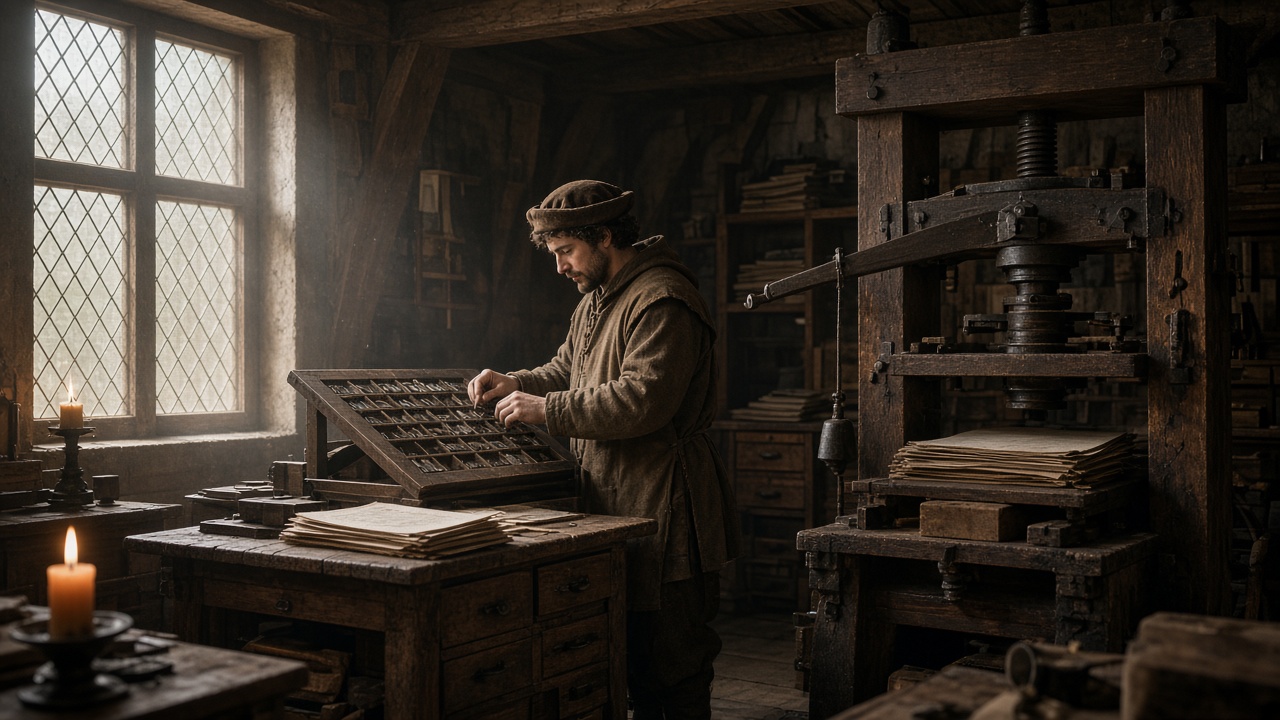
History educators want visuals that feel lived-in—tools, clothing, and architecture that match a moment in time. Seedance can suggest such scenes from detailed prompts, but it will invent objects if you skip research. Treat output as dramatized illustration, not archival footage, and label it clearly for students.
Documentary-style creators on Shorts face the same trust issue: viewers assume anything realistic-looking might be authentic. Transparent labeling protects your channel and teaches media literacy alongside content facts.
Start with a Specific Historical Moment
Choose a narrow scene: a printing workshop in fifteenth-century Europe, not “the entire Renaissance.”Define year range, region (Flanders or Mainz-style workshop), and what viewers should learn—how movable type changed copying speed, for example.
Write a learning objective in one sentence: “Viewers will see how compositors arranged type and prepared sheets for press.”That sentence filters out unrelated props—coffee cups, wall clocks—that models otherwise love to insert.
Research the Setting, Clothing, and Objects Before Prompting
Collect references for wooden presses, type cases, oil lamps, and wool clothing cuts appropriate to the period. Note anachronisms to exclude: eyeglasses styles, metal tools that did not exist, or modern windows. Write a banned-list (“no electric lights, no printed paper with modern fonts facing camera”.
Research should happen before visual generation because one inaccurate object—a modern lever, a coffee mug—can undermine an otherwise convincing scene. Keep a folder of museum photos beside your prompt doc and paste object names directly into each shot description.
Turn a Historical Event into a Short Visual Sequence
Break into three shots: establishing the workshop interior; close-up of hands placing type; wider view of pages drying on lines. Each shot gets its own prompt and duration target so you can replace one inaccurate prop without redoing everything.
Narrate cause and effect between shots: “Workers set each letter by hand”over the close-up, “Presses sped up copying across cities”over the wide finish. The visuals illustrate labor; your script carries historical argument.
Prompt Example: A Printing Workshop in Fifteenth-Century Europe
Adjust region-specific details after consulting a museum source. If the model adds suspicious machines, regenerate with shorter prompts emphasizing "hand tools only."
Include period, location, materials, lighting, character action, and camera direction in one detailed prompt rather than spreading details across retries. Fifteenth-century workshops were dim; mention candle fill plus window key light so faces stay visible without modern studio rigs appearing in frame.
Keep Costumes, Architecture, and Props Period-Appropriate
Reuse the same clothing paragraph in each prompt. Specify timber beams, plaster walls, and small paned windows. Avoid showing readable text on pages—add historically inspired but legible captions yourself if needed.
Close-ups of hands handling type should mention ink stains, wood grain, and metal type sticks without modern packaging. Wider shots can show printed sheets drying on lines—another chance to repeat palette and lighting words for continuity.
Separate Historical Facts from AI-Generated Details
Voiceover should cite well-sourced statements. On-screen disclaimers such as “dramatization for education”prevent confusion with real documentary film. Do not fabricate quotes from historical figures or fake archival dates. If uncertain about an object, leave it out of the prompt.
When captions name people or dates, double-check spelling against encyclopedia entries. AI may invent confident-looking details on signs or pages—keep text out of generations and overlay vetted copy instead.
Edit the Reenactment into a Clear Educational Story
Stext-to-video prompting basicse
Export a version with captions for classroom accessibility and review terminology with a curriculum guide if available. Regenerate any clip where tools look modern under pause-scrub inspection.
Recommend checking dates, terminology, clothing, tools, and captions against reliable historical sources before sharing with students. Label dramatized scenes in the opening seconds so viewers do not mistake AI illustration for authentic archival recordings or fabricated quotations.
Short-form history channels grow when each video covers one workshop, one battle eve, or one invention demo—not centuries in thirty seconds. Save broader eras for playlists built from these focused reenactment clips.
If a clip invents a prop you did not ask for, crop tightly or replace the shot rather than narrating around it—students remember the visual more than the correction. Build a personal library of approved generations so future videos reuse consistent workshop geometry instead of new accidental layouts.
Audio beds of ambient shop noise—distant press thuds, paper shuffle—can be mixed quietly under voiceover to add depth without claiming the sound is historically recorded. Keep levels low so facts in the narration stay primary.